
Best Time To Visit New York: Month By Month
Updated November 3, 2026
January and February bring the lowest hotel rates of the year, while September and October bring the most reliable weather. Here is how each month actually stacks up on price, temperature and crowds.

Short answer
The cheapest months to visit New York are January and February, when average Manhattan hotel rates sit near $196 per night. The most comfortable months are September and October, with highs around 69F in October and thinner summer crowds. December is the priciest month at roughly $541 per night.
January and February are the cheapest months to visit New York, with average Manhattan hotel rates near $196 per night in January, and December is the most expensive at roughly $541. Those two numbers, more than any weather chart, decide what a trip costs. The trade is simple: pay less and pack a coat, or pay double for warm-weather months and holiday lights. Monthly highs run from 42F in January to 87F in July and back down to 46F in December, according to aggregated climate and hotel data, and every month in between has its own case.
What Is The Best Time To Visit New York Overall?
September and October are the strongest overall months: October highs average 69F, hotel rates have not yet hit the December peak, and the summer family crowds have gone home. January and February win on price alone, near $196 per night in January, if you can plan around cold. December costs the most, around $541 per night, but delivers the tree, the shops and the Rockettes.
That verdict comes from three data points that move together through the year: temperature, hotel rates and event calendars. Aggregated hotel pricing shows a swing of well over 100 percent between the January low and the December high, which is a bigger spread than most American cities see. A reader working out the full math on a longer stay will find the week-by-week planning numbers in How Much Would A 1 Week Trip To New York Cost?, where the average one-week spend lands near $2,538 per person before you weigh the seasonal hotel swing.
The choice also depends on what the trip is for. A first-time visitor ticking off the major sights has different needs from someone returning for the holiday markets. The city hosted 65 million visitors in 2025, with a projection of about 66.3 million for 2026, so no month is genuinely quiet anymore; some are just less expensive than others.
When Is The Cheapest Time To Visit New York?
January and February are the cheapest months to visit New York, with average Manhattan hotel rates around $196 per night in January against roughly $541 in December. Budget travelers report spending $75 to $120 per day excluding lodging, and mid-range travelers $150 to $250. Late January through February offers the year's best hotel value.
The savings compound across a whole itinerary, not just the room. Off-peak months also see softer pricing on Broadway, where same-day TKTS discounts of up to 50 percent off face value are easier to score when houses are not full, per the official TKTS program. Travel cost trackers put the average one-week trip at about $2,538 per person, and that average blends cheap January stays with expensive December ones, so traveling in the trough months pulls a real trip well under it.
Packages follow the same curve. Tour operators price their New York departures lower in the winter shoulder, and the 5-day spotlight on New York City from Collette starts at $2,899 per person, a fixed-price way to lock hotels and guided sightseeing before rates climb toward the holidays. Self-guided travelers have cheaper still options: the 10-day New York crosswise route from Worldee runs from $1,400 per person and lets you set the pace across a quieter city.
If you are weighing a package against booking it all yourself, the escorted-versus-independent question has its own breakdown in Escorted Vs Self-Guided New York Trip, and the cost logic there leans even harder toward packages in the expensive months, when the operator's negotiated hotel rates matter most.
How Does New York Weather Change Month By Month?
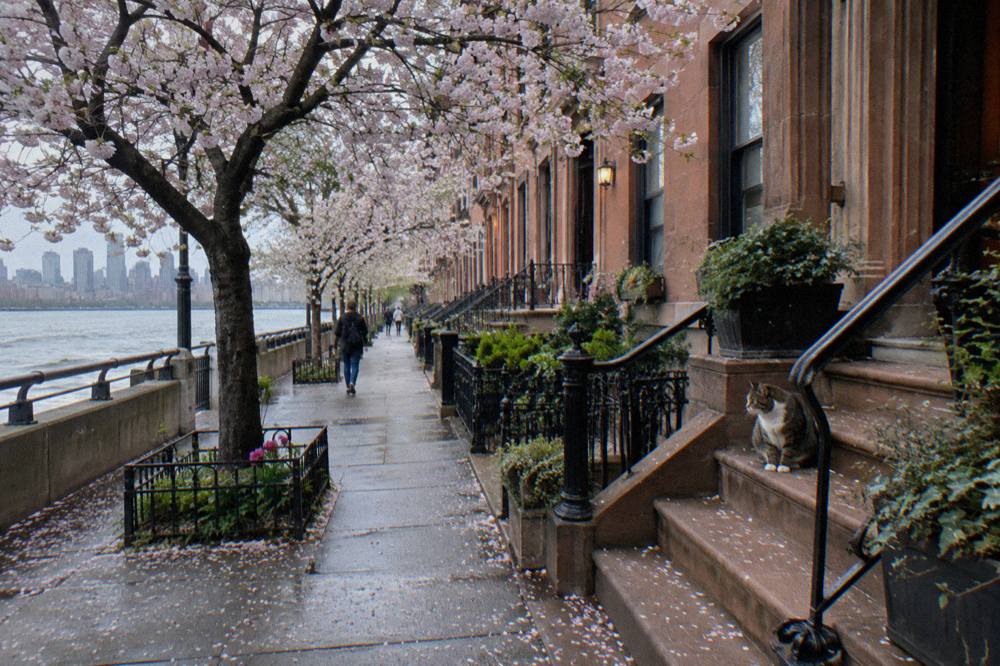
Monthly highs climb from 42F in January to 87F in July, then fall back to 46F by December, per aggregated climate normals. April sits at a mild 61F, making spring the most forgiving shoulder season. Snow concentrates from December through March, while February averages about 10 inches and is statistically the driest month for precipitation.
The table below pulls the headline numbers into one view. Treat them as planning normals, not forecasts: any given week can run ten degrees either side of these figures, and the sources report them as averages, per aggregated month-by-month climate data.
| Month | Average high | Average hotel rate (Manhattan) | What defines it |
|---|---|---|---|
| January | 42F | ~$196/night | Cheapest rates, cold, quiet |
| February | 42F | Low | Driest month, ~10 in snow average |
| March | Mild | Low-mid | Thaw begins, hotel rates creep up |
| April | 61F | Mid | Spring bloom, comfortable walking weather |
| May | Warm | Rising | Pre-summer crowds build |
| June | Warm | High | Long days, outdoor season |
| July | 87F | High | Hottest, peak family travel |
| August | Hot | High | Humid; locals vacation away |
| September | Pleasant | Easing | Post-Labor Day value window |
| October | 69F | Mid-high | Most reliable weather of the year |
| November | Cooling | Climbing | Thanksgiving parade, holiday setup |
| December | 46F | ~$541/night | Peak pricing, tree, Rockettes |
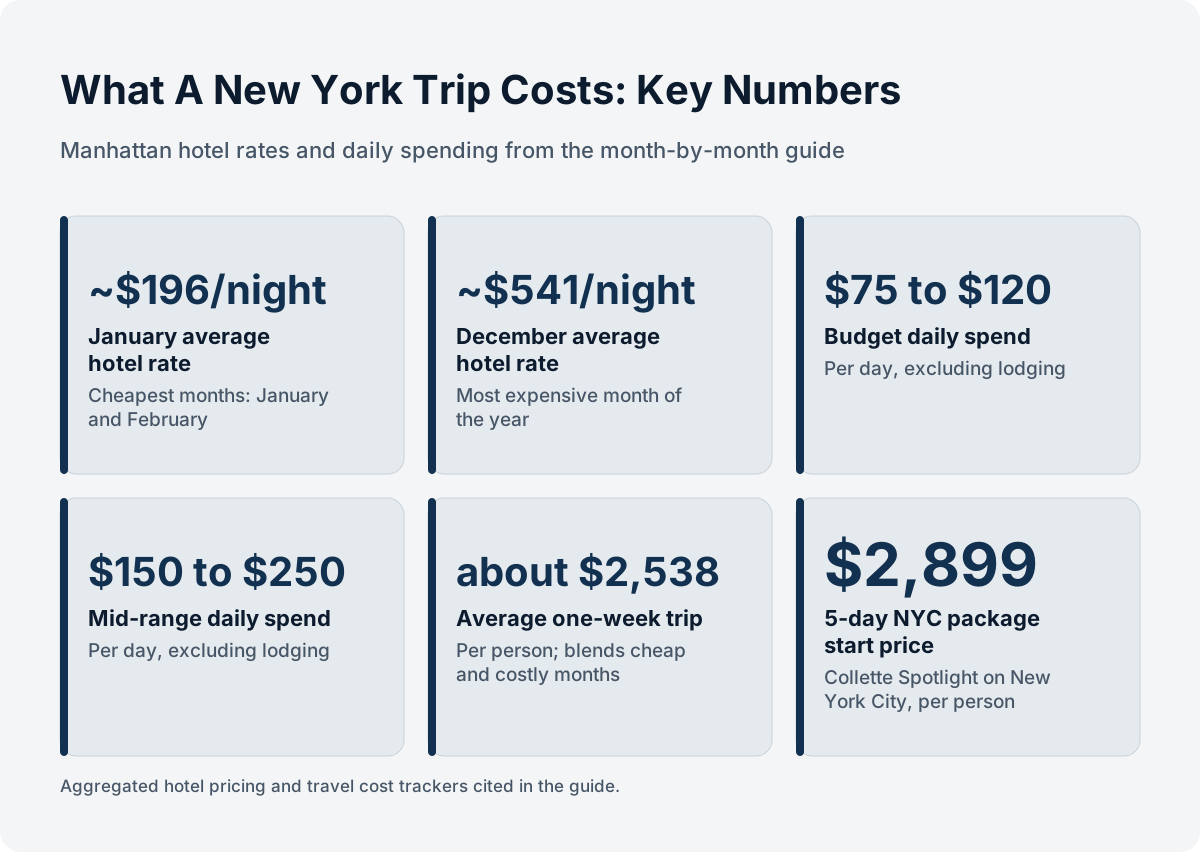
September and October are the months where the two lines in that chart work in your favor at the same time: rates have stepped down from summer while the weather is still warm enough for long walking days. Anyone building a day-by-day plan around that window can lift a ready structure from New York Itinerary: 4 Days, Planned Honestly (2026).
Which Months Cost The Most, And Why?
December is the most expensive month, with average Manhattan hotel rates around $541 per night, driven by the Rockefeller Center tree lighting on December 2, 2026 and the Rockettes season running November 4, 2026 through January 4, 2027. November's Thanksgiving week and July's summer peak follow close behind. Book early or expect premium rates.
The December premium is not irrational; it buys a city that only exists for six weeks. The Union Square Holiday Market and the Bryant Park Winter Village stack vendor stalls and a free-admission ice rink across the holiday weeks, and the tree stays lit through mid-January. Visitors weighing a festive trip will find the full event rundown in New York Christmas Tours, including which guided departures cover the markets.
Holiday-season packages sell out earliest for a reason, and the fixed-price structure of a guided package is at its most useful when hotel rates are at their wildest. That is the one window where paying an operator up front can beat booking rooms night by night. Everything else covered here is indexed on New York Tour Packages.
Should You Plan Around Events Or Around Prices?
Plan around prices if budget is the constraint, since the January-February trough saves more than any event adds; plan around events if the trip has a fixed purpose, like the Macy's parade on November 26, 2026 or a Broadway season. Event months carry hotel premiums of 50 to 100 percent over the trough, so one parade can cost a week of savings.
The honest test is whether the event is the reason for the trip or a nice extra. Someone flying in specifically for the 100th Thanksgiving parade accepts December-adjacent pricing as the cost of the thing itself. Someone who just wants to see New York broadly gets more trip for the money in February, when the same museums, observation decks and food tours run at trough prices, and budget trackers put daily spending at $75 to $120 per person excluding lodging for a budget pace, per aggregated traveler spending data.
A middle path is the self-guided road trip format, which spreads cost across regions instead of Manhattan hotel nights. The 9-day New Jersey to Long Island route from Worldee starts at $1,148 per person and works well in the shoulder months when coastal stops are pleasant but not peak-priced.
What About A First Visit In Any Month?
First-time visitors get the most from April, May, September or October: comfortable temperatures for long walking days, moderate rates and full operation of every major attraction. Winter works too, with cheaper hotels and shorter lines, provided you pack for 42F highs. The itinerary matters more than the month.
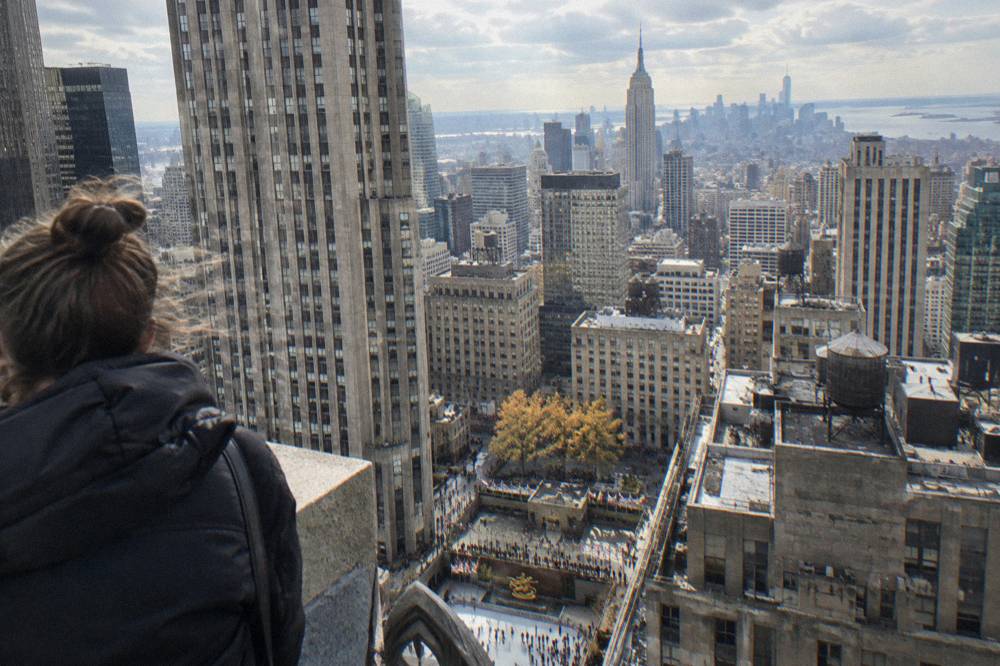
A first trip leans on walking, and the subway fare math holds year round: the base fare is $3 per ride with a $35 weekly OMNY cap, per transit fare references. What changes by month is how pleasant those transfers feel and how long the outdoor queues run. The structure of a good first visit, which sights pair on which days, is laid out in What Should I Do In New York For 3 Days?, and it holds in any season.
| Traveler type | Best months | Why |
|---|---|---|
| Budget traveler | January, February | Hotel rates near the ~$196 trough |
| Weather seeker | September, October | October highs average 69F, thinner crowds |
| Holiday fan | Late November, December | Tree, markets, Rockettes; peak rates |
| Families | June, July | School holidays, full outdoor season |
| Broadway fan | January, February | Easier TKTS discounts up to 50% off |
Group-format packages smooth the month question further, since the operator absorbs rate swings. For travelers who prefer that structure, New York Hotel And Tour Packages breaks down what a bundled price typically covers.
Choosing a month is really choosing what to pay for: warmth, festivity or savings. The city itself, all 65 million visitors' worth of it, runs on schedule either way.
Common Questions About The Best Time To Visit New York
What is the cheapest month to visit New York?
January, with average Manhattan hotel rates near $196 per night. February is close behind and is also the statistically driest month.
What is the most expensive month to visit New York?
December, with average hotel rates around $541 per night, driven by the Rockefeller Center tree, holiday markets and the Rockettes season.
When is the best weather in New York?
September and October. October highs average 69F with lower humidity than summer, per aggregated climate data.
Is New York worth visiting in winter?
Yes, for the price. January and February bring the year's lowest hotel rates and cheaper Broadway options through TKTS discounts of up to 50 percent off, offset by 42F highs.
When is the best time to visit New York?
September and October for the balance of weather, crowds and rates; January and February if price is the priority.
What month has the Macy's Thanksgiving Day Parade?
November. The 100th parade is scheduled for November 26, 2026.