East Coast Tour Packages from New York: Routes That Actually Exist (2026)
Almost nothing sold as an East Coast circuit is one continuous guided tour, and the versions that work are cheaper than the ones that are not.

Short answer
Most East Coast packages sold from New York are one of three things: a city base with day trips bolted on, a self-drive road trip with hotels pre-booked, or a guided package that never actually leaves one city. The road-trip version runs 9 days from $1,148. Day trips from a New York base cost $107 to $180 each, and trains to Philadelphia start at $11.
Search for an East Coast tour and you get pictures of five cities, a map with a red line through them, and a price that suggests somebody has solved the logistics for you. Book one and you often discover what you actually bought: a hotel in one place, a coach that runs out and back on two of the days, and a lot of free time you are expected to fill.
That is not a scam. It is just how the northeast works. The famous stops sit on a rail corridor between one and three and a half hours apart, which makes them day-trippable and therefore makes a true multi-city circuit hard to sell against. What follows is what the real options look like, what each one costs from a New York base, and which one fits the trip you are actually taking.
What does an East Coast tour package actually include?
Three shapes, and almost every listing is one of them. A city base with day trips added, where you sleep in one hotel and ride out and back. A self-drive road trip with hotels pre-booked along a route. Or a guided package with a tour manager that stays inside a single city and calls itself an East Coast tour because the city is on the East Coast.
The distinction matters because the three sell at wildly different prices for overlapping experiences. The base-plus-day-trips version has the lowest floor and the highest ceiling, because you control what you add. The road trip is the only one that genuinely moves you along a coast. The guided city package costs the most per day and removes the most work.
What almost nobody sells from New York is the thing people picture: a guided coach that runs New York to Philadelphia to Washington to Boston with a guide on board the whole way. Those exist as long-haul national tours starting elsewhere, but as a week-long product bought from a New York arrival, the market has quietly replaced them with day trips. That is the honest starting point for the rest of this page.
| Shape | What is actually booked | Who plans the days | Typical spend | Fails when |
|---|---|---|---|---|
| City base plus day trips | One hotel, plus individual guided trips out and back | You, one trip at a time | $107 to $180 per day trip, plus your hotel | You want to wake up somewhere new |
| Self-drive road trip package | A route, all hotels along it, an itinerary to follow | The operator plans, you drive | From $1,148 for 9 days | You do not want to drive, or cannot |
| Guided package with a tour manager | Hotel, guide, admissions, a fixed daily schedule | Nobody, it is done | From $2,899 for 5 days | You want to move between cities |
What does the base-plus-day-trips approach really cost?
Cheaper than it looks, because you are paying for one hotel instead of five. A New York room averaged $333.71 a night across 2025. Add a guided day to Washington at $107, a Niagara day at $180 and a train to Philadelphia from $11, and a week of East Coast highlights lands well under the price of a guided package.
The hidden saving is not the room rate, it is the friction. Every city change on a multi-stop trip costs you a checkout, a transfer, a check-in and roughly half a usable day. Do that four times in a week and you have spent two days moving luggage. From a single base you spend those hours at the destination instead, and the trains do the moving while you sit down.
The hidden cost is the return leg. A day trip always ends where it started, so a Washington day is 14 hours and a Niagara day is 22, against three and a half hours one way by rail to the capital if you were simply travelling there. You are buying the guide, the logistics and the same bed at the end, and paying for it in road time. Whether that is a good trade depends entirely on how many nights you have.
Rail prices are the part most visitors underestimate in the wrong direction. New York to Philadelphia runs hourly or better, takes between about an hour and five minutes and an hour and forty-six, and starts around $11 one way. New York to Washington is three to three and a half hours from roughly $20, with buses at $17 to $65 taking about five. Check live fares on Amtrak before you assume a guided day trip is the cheaper option, because sometimes it is not, and sometimes it is by a mile. Whether the city at the end of that $11 ride deserves the whole day has its own honest answer.
| From a New York base | Time out and back | Cost | What you get for it |
|---|---|---|---|
| Guided Washington DC day | About 14 hours | From $107, regular $114 | Capitol, White House exterior, Lincoln and the war memorials, guide both ways |
| Guided Niagara Falls day | About 22 hours | From $180 | Roughly 400 miles each way, viewpoints and the boat in season |
| Philadelphia by train, self-guided | 2 to 4 hours of travel total | From $11 one way | Independence Hall, the Liberty Bell, Reading Terminal Market, the art museum |
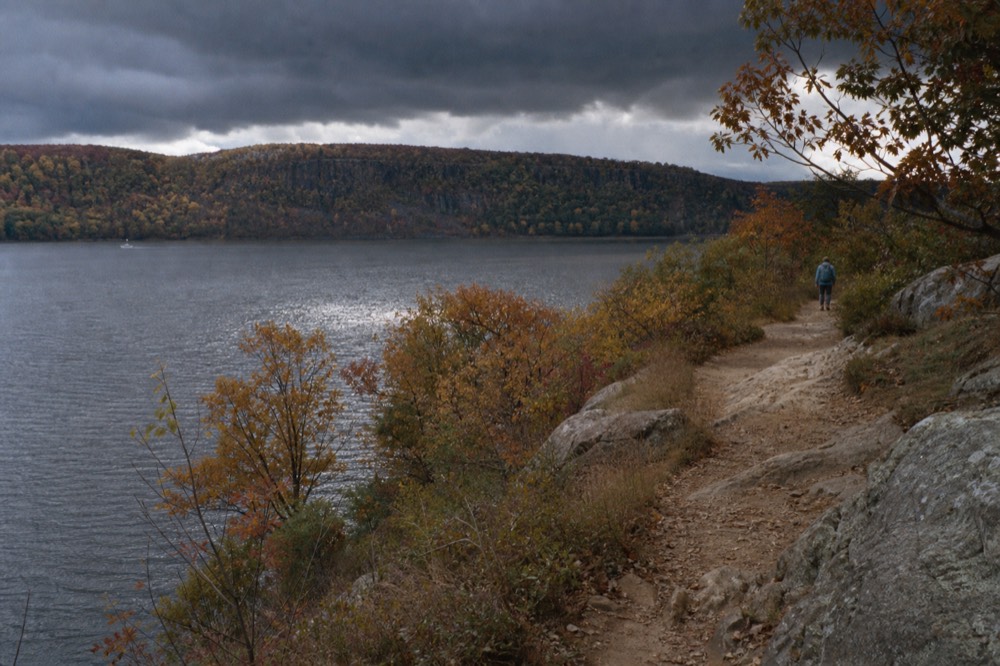
| Hudson Valley by train | 75 to 90 minutes each way | Roughly $23 to $45 round trip off-peak | Cold Spring or Beacon, river hiking, a half day |
| Hamptons by summer express | 92 to 96 minutes each way | $33 one way, reserved | Beach villages without a car |
| Your New York hotel, per night | n/a | $333.71 average across 2025 | The bed you keep for all of the above |
What does a road-trip package actually book for you?
Hotels, a route and an itinerary. The nine-day New Jersey to Long Island trip runs from $1,148 with rooms held the whole way, moving from Princeton down the Jersey Shore to Cape May, then across to Sag Harbor and Montauk. It confirms instantly. You supply the car and do all of the driving.
This is the shape that genuinely earns the word tour, because you wake up somewhere different. The route reads like a coastline rather than a checklist: Princeton's campus, the Asbury Park boardwalk, a real hike at the Delaware Water Gap with wine tasting at Beneduce Vineyards, the Victorian streets of Cape May, then whaling history at Sag Harbor, surf and the lighthouse at Montauk, and Hudson River views at Untermyer Gardens in Yonkers on the way back.
The pre-booked hotels are the part that saves the most work, because summer weekends on the Jersey Shore and the East End are exactly when independent booking gets painful. The listed properties include a Hampton Inn at Princeton, the Offshore in Montauk and a Residence Inn at Yonkers. This is a private, self-guided product from Worldee, so there is no group, no guide and no tour-level review history to read yet: the operator's other tours average 4.2 across 21 reviews, which is the only rating attached to it. Judge it on the route and the hotels rather than on stars that do not exist. You can see the full day-by-day route and current dates on the listing.
| Stage | Where | What is there |
|---|---|---|
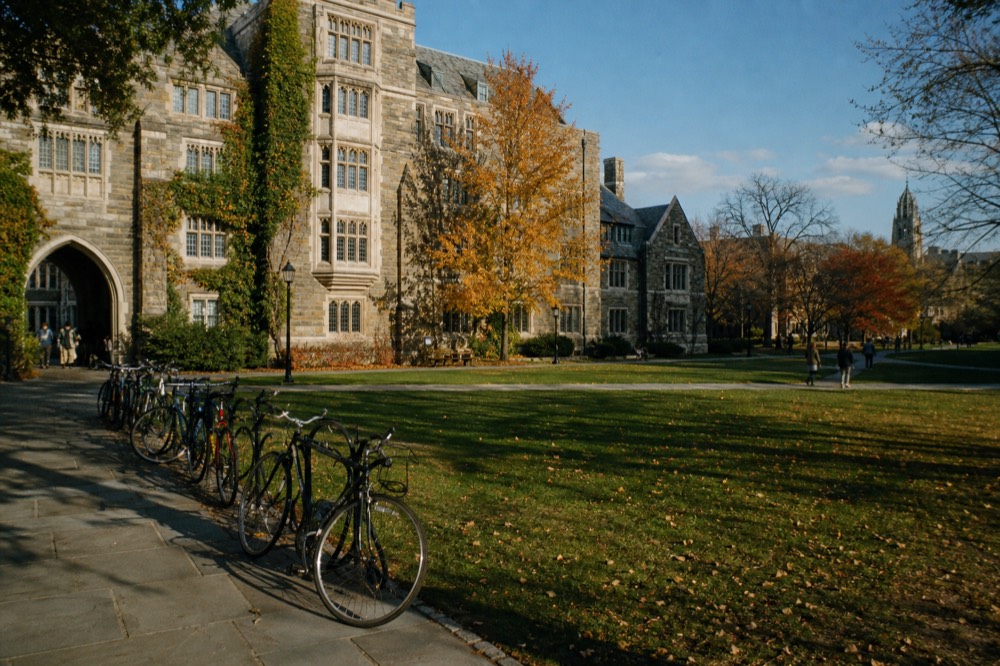
| Opening leg | Princeton, New Jersey | University campus, walkable town, about an hour and forty minutes from the city |
| Shore | Asbury Park | Boardwalk, music history, Atlantic beach |
| Inland detour | Delaware Water Gap and Beneduce Vineyards | A real hike, then a tasting, the only non-coastal day |
| Southern tip | Cape May | Victorian resort streets, lighthouse, ferry access |
| Crossing | To the East End of Long Island | The point where the trip changes character |
| East End | Sag Harbor | Whaling-era harbour town, quieter than the Hamptons proper |
| Far end | Montauk | Surf, the lighthouse, the end of the island |
| Return | Untermyer Gardens, Yonkers | Hudson River views on the way back into the city |
Where do the fully guided packages actually go?
Not as far as their marketing implies. The guided package on this site runs five days from $2,899 and never leaves New York City: four nights at the Sheraton New York Times Square, a locally guided landmarks day, a Broadway show, the harbour ferry to the Statue of Liberty and Ellis Island, and the 9/11 Memorial and Museum. It is excellent, and it is not a circuit.
Being clear about that is more useful than pretending otherwise. A tour manager, guaranteed departures and groups of 2 to 44 buy you a trip where nothing is your problem, from an operator rated 4.5 across 954 reviews at operator level, with the tour itself sitting at 4.2 across 12 reviews. For a first-time visitor who wants zero logistics, that is worth real money. What it is not is a way to see four states.
The per-day arithmetic is where guided packages get argued about. Five days at $2,899 is roughly $580 a day including the hotel, the show, the admissions and the guiding. Set against a New York room at $333.71 plus a Broadway seat that averaged $113.35 in the week ending 23 August 2026, plus admissions, the gap narrows fast. It does not close, but it narrows more than most comparisons admit. The full version of that maths sits in what all-inclusive really buys and in when bundling a hotel beats booking separately.
How far is each East Coast stop from New York?
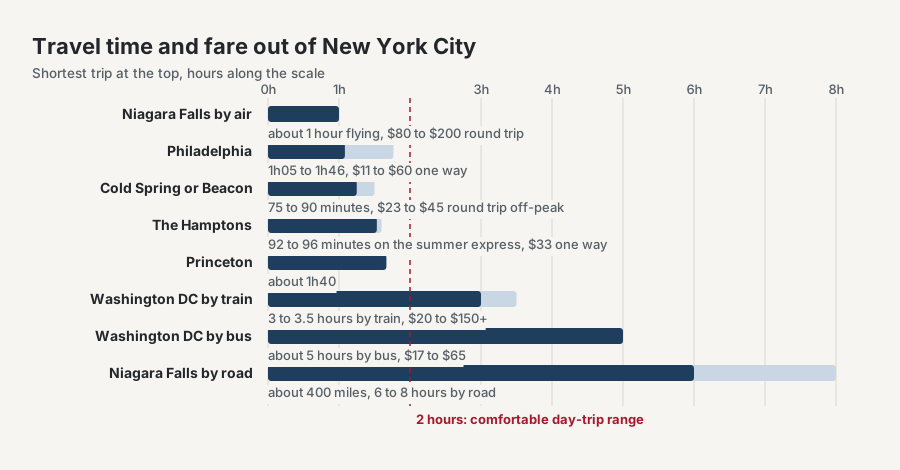
Closer than the map suggests, except one. Philadelphia is about an hour and five minutes to an hour and forty-six by train from $11. Washington is three to three and a half hours from about $20. The Hudson Valley is 75 to 90 minutes and the Hamptons 92 to 96 on the summer express. Niagara Falls is the outlier at roughly 400 miles.
This table is the reason the base-plus-day-trips approach beats a circuit for most one-week trips. Four of the five headline destinations are inside a two-hour rail journey of Penn Station or Grand Central. Moving your entire luggage to reach them is work you do not need to do.
Niagara is the exception that proves the rule. It is 6 to 8 hours of driving each way and around 400 miles, which is why it is sold as a 22-hour endurance day or not at all, and why flying to Buffalo, about an hour in the air at $80 to $200 round trip, is the sane version if your budget allows it. The full comparison lives in our guide to Niagara Falls tours and the 22-hour day, and you can also check dates and the live price on the guided version.
| Destination | Fastest realistic time from New York | Typical cost | Frequency |
|---|---|---|---|
| Philadelphia | About 1h05 to 1h46 by train | $11 to $60 one way | Hourly or better |
| Princeton, New Jersey | About 1h40 by rail or road | Regional rail fares | Frequent commuter service |
| Cold Spring or Beacon | 75 to 90 minutes by train | Roughly $23 to $45 round trip off-peak | Frequent, Hudson Line |
| The Hamptons | 92 to 96 minutes on the summer express | $33 one way, reserved | Summer Thursdays and Fridays |
| Montauk | Roughly 2.5 to 3.5 hours by standard rail, 2 to 4 hours driving | Standard rail fares | Direct evening service goes year-round from September 2026 |
| Washington DC | 3 to 3.5 hours by train, about 5 by bus | $20 to $150+ rail, $17 to $65 bus | Frequent all day |
| Niagara Falls | 6 to 8 hours driving, about 1 hour flying to Buffalo | $80 to $200 round trip air | Daily flights, one long coach day |
Which approach fits which traveler?
Take the road trip if you will drive and want the coast. Take the base-plus-day-trips route if you have a week or less and want the famous names. Take the guided package if you want somebody else to handle every queue, and accept that it stays in one city. Mixing the first two is what most experienced visitors actually do.
Group size flips the answer faster than anything else. Four adults sharing a rental make the road trip look cheap and the guided package look extravagant. A solo traveller gets the opposite result: guided day trips are priced per person with no penalty, while a car and a room for one is the worst rate in every category.
Length of stay is the second lever. Under five nights, moving cities is a waste of your trip and the base approach wins on every measure. At ten nights or more, staying in one hotel starts to feel static, which is exactly the problem the ten-day private, self-guided city itinerary solves in a different way: one hotel on Fifth Avenue for the whole stay, but a plan that works Manhattan and Brooklyn neighbourhood by neighbourhood, from Midtown and the Edge deck through the High Line, Lower Manhattan, Central Park and the Brooklyn Bridge walk to Dumbo and Williamsburg. It carries no tour-level reviews, and the operator's other tours average 4.2 across 21 reviews.
| You are | Nights | Best shape | Why |
|---|---|---|---|
| First-time visitor, couple | 4 to 6 | Base plus day trips | No wasted transfer days, the capital fits in one |
| Family with a car and older kids | 7 to 10 | Road-trip package | Beaches, hikes and towns, hotels already held |
| Solo traveller | Any | Base plus day trips | Per-person tour pricing beats a car and a single room |
| Nervous first-timer, wants zero logistics | 5 | Guided package | Tour manager, guaranteed departures, admissions handled |
| Returning visitor | 10+ | Self-guided long stay | One hotel, neighbourhood-depth rather than landmark-ticking |
| Group of four adults | 7 to 9 | Road-trip package | Splitting a car makes the per-head cost the lowest here |
What does a seven-day East Coast week look like from one base?
Two big guided days out, one self-guided rail day, and four days of city. That structure gives you Washington, Philadelphia and a Hudson Valley half-day without ever changing hotel, and it leaves enough slack that one rained-out afternoon does not wreck the week.
The sequencing matters more than the contents. Put the 14-hour Washington day early, while your body clock still thinks 5 a.m. is reasonable, and never put two long days back to back. Keep the last full day light, because packing after a 22-hour Niagara return is a specific kind of misery.
Ticket costs are the part to plan rather than the transport. Observation decks run $39 to $48 for a standard adult, the 9/11 Museum is $24 to $36, MoMA is $30 and the Met is about $30 for non-residents. Broadway averaged $113.35 in the week ending 23 August 2026 against a season average nearer $131, and the TKTS booths sell same-day seats at 20 to 50 percent off. Getting around costs $3 a ride with a contactless tap, capped at $35 across seven days, after which the rides are free.
| Day | Shape | What it costs |
|---|---|---|
| 1 | Arrive, harbour hour or a neighbourhood walk | $25 for a 60-minute skyline cruise |
| 2 | Guided Washington DC day, about 14 hours | From $107 |
| 3 | Recovery day in the city, museums and a deck | $30 to $48 per entry |
| 4 | Philadelphia by train, self-guided | From $11 one way, historic core and the market |
| 5 | Statue of Liberty and Ellis Island, then Lower Manhattan | $33 for the official ticket |
| 6 | Hudson Valley half-day, or the Hamptons in summer | $23 to $45 round trip, or $33 one way |
| 7 | Broadway and a slow last day | $113.35 average, less at the TKTS booths |
Swap day 6 for the Niagara day only if you are willing to lose day 7 to recovery. If you want the fuller version of a city-only week, a four-day plan built honestly and what a one-week trip really costs both extend cleanly into seven. For the shorter escapes that fit around it, see every trip that fits in one day and two-day coast and mountain escapes.

What do East Coast packages leave out?
Admissions, meals and city transport, almost always. A route package books your rooms and your itinerary. It rarely books the observation deck at $39 to $48, the 9/11 Museum at $24 to $36, the Broadway seat, the $33 harbour ticket or the $3 subway taps. Budget $60 to $120 a day per person on top for a city-heavy week.
The exception is the fully guided package, which is exactly why it costs what it does: the Broadway show, the harbour ferry to both islands and the 9/11 Memorial and Museum are inside the price. Everything self-guided leaves those to you, and that is not a criticism, it is the trade you are making for flexibility.
One admission genuinely worth pre-booking rather than improvising is the official Statue of Liberty and Ellis Island ferry ticket, at $33 for three to four hours across both islands with the museums included, rated 4.6 across more than 20,000 reviews. Battery Park is where unlicensed sellers work hardest, quoting incomplete ferry prices to people who have not bought ahead, and a printed ticket removes the whole conversation. It is the single most-reviewed thing on this site, and you can check today's ferry times before you go.
| Item | Base plus day trips | Road-trip package | Guided package |
|---|---|---|---|
| Hotel | You book it | Booked along the route | Included, four nights |
| Between-city transport | You book each trip | Your own car | Coach, within the city |
| Attraction admissions | You buy each one | You buy each one | Included on the itinerary |
| Broadway | You buy, $113.35 average | Not applicable | A show of your choice, included |
| Meals | All yours | All yours | Some, check the listing |
| City transport | $3 a tap, $35 weekly cap | Parking is the real cost | Handled |
| Flexibility | Total | High, the route is fixed but the pace is not | Low by design |
Whichever shape you pick, it helps to see the options against each other rather than one listing at a time: compare every verified escape from New York shows the multi-day routes and the single-day trips on one page. The city's own planning resources at NYC Tourism are useful for events and seasonal openings, and the state comptroller's hotel report is where the room-rate figures above come from.
East Coast route questions travelers actually ask
Is there a guided tour that covers the whole East Coast from New York?
Not as a mainstream week-long product bought from a New York arrival. The northeast corridor puts Philadelphia about an hour and Washington about three hours from Penn Station, so operators sell day trips out and back instead of moving a group city to city. The closest thing to a real circuit is a self-drive route package with hotels pre-booked, which runs nine days from $1,148.
How many days do you need for an East Coast trip from New York?
Seven is the honest minimum for New York plus two other destinations. That allows four city days, one 14-hour guided day to Washington and one self-guided rail day to Philadelphia, without back-to-back long days. Under five nights, skip the outside trips entirely: transfers and 14-hour days would eat a third of your stay for sights that are not why you came.
Is it cheaper to do day trips or a multi-city package?
Day trips from one base usually win for stays of a week or less. You pay for one hotel, at a 2025 New York average of $333.71 a night, instead of four check-ins, and each guided day costs $107 to $180. A multi-city package only pays off when it includes admissions and guiding you would otherwise buy separately, or when you genuinely want to wake somewhere new.
Can you drive the East Coast route yourself?
Yes, and the self-drive package is built for exactly that: it books the hotels and hands you the route, from Princeton down the Jersey Shore to Cape May and across to Sag Harbor and Montauk, with instant confirmation. You supply the car and do every mile. It works out cheapest for three or four adults sharing, and worst for a solo traveller paying single-occupancy rates.
Do East Coast packages include attraction tickets?
Route and self-drive packages almost never do. Expect to add $60 to $120 a day per person for a city-heavy stretch: observation decks are $39 to $48, the 9/11 Museum is $24 to $36, MoMA is $30 and the official Statue of Liberty ferry ticket is $33. Fully guided packages are the exception and build the Broadway show, ferry and museum entries into the fare.
What is the best month for an East Coast road trip from New York?
September and early October. Beach towns still work, the Delaware Water Gap hiking is at its best, summer traffic on the shore roads has thinned, and New York room rates sit below the December peak of roughly $541. July delivers the fullest seasonal programme but the heaviest congestion, with city highs averaging 84.9°F and Friday afternoon shore traffic at its worst.