
Boston Day Trip From NYC: Is It Realistic?
Updated November 3, 2026
A Boston day trip from NYC is realistic but tight: Amtrak covers 215 miles in under 4.5 hours each way, leaving roughly 6 hours on the ground. Here is the math, the transport options, and when an overnight wins.
Boston Day Trip From NYC: Is It Realistic?
Yes, a Boston day trip from NYC is realistic, and Amtrak is the reason. The rail distance is roughly 215 to 231 miles, covered in 3 hours 40 minutes to 4 hours 30 minutes each way, with one-way fares running $22 to $316 depending on train and booking timing. Board a 6 a.m. train and you get about six waking hours in Boston before an evening return. It is tight but genuinely doable.
The honest framing is this: Boston is not a casual day trip the way Philadelphia is. Philadelphia sits about 95 miles away and takes as little as 1 hour 20 minutes by train, so a spontaneous day there costs you under three hours of round-trip travel. Boston demands roughly double that, closer to eight or nine hours of sitting before you count getting to and from Penn Station and South Station. Travelers keep asking this exact question on Reddit, in threads like the r/AskNYC discussion on regional rail after a first Amtrak ride to Boston, and the consensus that emerges is that the trip works as a train day but falls apart if you try to drive it.
Distance and time, side by side:
| Mode | One-way time | One-way fare | Notes |
|---|---|---|---|
| Amtrak | 3h40 to 4h30 | $22 to $316 | Fastest and most reliable option; Acela at the top of the fare range |
| Bus | 4h15 to 5h30 | $13 to $66 | Cheapest, but traffic on I-95 makes the schedule a guess |
| Car | ~4 to 5+ hours | fuel, tolls, parking | Parking in Boston adds cost and friction |
That table is the whole decision in one glance. If the train fares line up early, book the train. For everything else that fits in a single day, the day tours from New York overview ranks the trips that genuinely work without a hotel night.
How Do You Get From NYC To Boston And Back In One Day?
Take Amtrak from Moynihan Penn Station to Boston South Station, and treat the schedule as the itinerary. The morning Northeast Regional can leave around 6 a.m. and arrive shortly after 10, with evening returns running into the 8 p.m. hour. One-way fares span $22 to $316, and buses run $13 to $66 but take 4 hours 15 minutes to 5 hours 30 minutes with no protection from I-95 traffic.
The train is not just faster on paper, it is faster in practice, because the Northeast Corridor track is largely immune to the congestion that eats bus schedules alive between New Haven and Providence. A bus listed at 4 hours 30 minutes can arrive at 6 once the afternoon queue starts. The Acela shaves the rail time toward the lower end of the range but sits at the top of the fare range; a day-tripper who leaves at dawn and returns after dinner is spending that money to save perhaps 30 minutes each way. The Northeast Regional at a mid-range fare is the standard play.
Booking timing matters more than train choice. The $22 fares exist but vanish early; the $316 ceiling is a walk-up Acela business seat. Fares in the $40 to $90 band are typical for a ticket bought a few weeks out. Buy the return as a fixed train, not a flexible one, and build a small buffer: a 7 p.m. return you can hop on at 6 if your feet give out beats a 9 p.m. you are stuck waiting for.
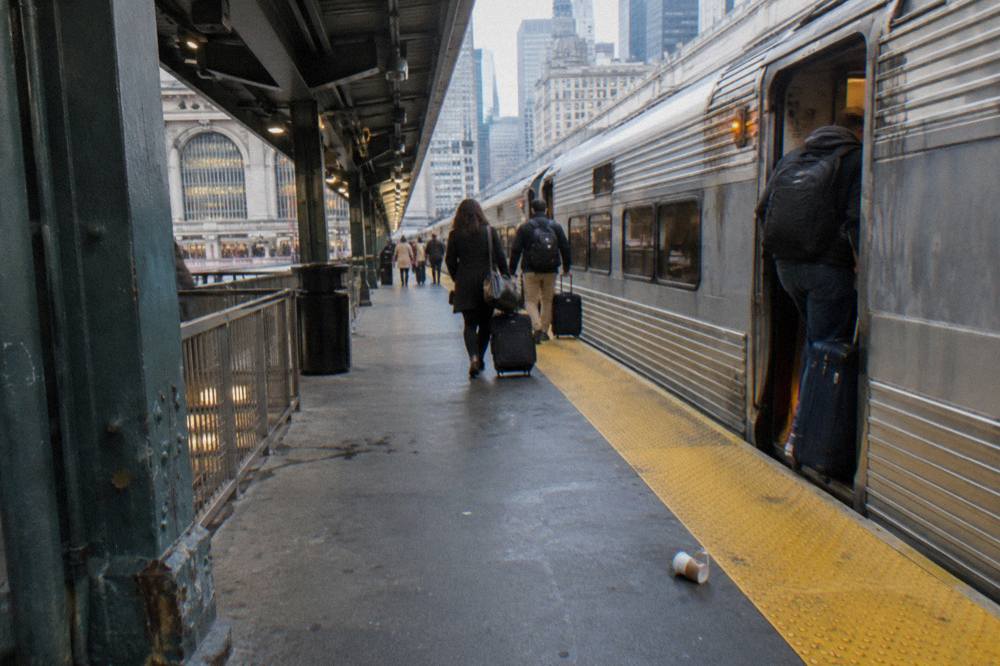
One more time reality: getting between South Station and the Freedom Trail is a 10-minute walk, and most of colonial Boston is walkable from there. The train station placement is a genuine advantage over driving, where you would exit into city traffic and then pay downtown parking rates on top.
For a different single-day shape entirely, the Washington DC day trip from NYC by van or bus runs about 15 hours from $107 per person and is rated 4.6 across 4,694 reviews, a guided alternative for travelers who would rather sleep on a coach than watch rail signals.
Day Trip Or Overnight?
Do the day trip if your Boston list is short: the Freedom Trail, Quincy Market, the North End, and a harbor walk all sit within a 20-minute walk of South Station. Choose an overnight if you want museums, Cambridge, or a Red Sox game, because a single day leaves room for none of those. Hotel costs tip the math: Manhattan and Boston rates both swing hard by month, which is worth checking before you commit.
The six-hour version of Boston is a great six hours. Start at South Station, walk the Freedom Trail's red line past Faneuil Hall and the Old North Church, eat a cannoli in the North End, walk the harbor edge, and be back at the station with time to spare. That is a complete, satisfying Boston visit and it costs no hotel night. The moment your list adds the Museum of Fine Arts, Harvard Square in Cambridge, or an evening ballgame, the day trip stops working, because those items alone consume the hours you have.
Cost is the second axis. A day trip is essentially two train fares plus food; an overnight adds a Boston hotel night, and hotel pricing in the region moves sharply by season. Aggregated booking data shows average Manhattan rates swinging from roughly $196 in January toward $458 in September and $541 in December, per Engine's hotel price tracker, and Boston follows a similar seasonal curve. A January overnight is a bargain; a December or September one can double the trip's cost.
There is a third option that solves the problem differently: skip the day trip and buy a route instead. Multi-day East Coast bundles that stitch New York, Boston, DC, and Philadelphia together start from $338 for a 4-day Boston-inclusive itinerary and $268 for Niagara-DC-Philly combinations, per TakeTours' New York departure listings. The east coast tour packages from New York guide maps which of these routes actually exist and what they include.
If the real itch is getting out of the city for longer rather than squeezing a second city into one day, the 9-day New Jersey to Long Island road trip runs from $1,148 per person with Worldee, self-guided and private. It is the opposite bet: instead of maximum distance in minimum time, it is coastline at your own pace.
What Does The Whole Day Cost?
Budget the transport first, since that is the line with the widest spread. Amtrak one-ways run $22 to $316 each, so two booked early land near the floor of that range and two bought late land near the ceiling. Bus one-ways run $13 to $66 each. Add a Freedom Trail walk, which is free, plus lunch in the North End, and the shape of the day's budget is clear: transport swings more than everything else combined.
| Cost item | Low | High | Basis |
|---|---|---|---|
| Amtrak fare, each way | $22 | $316 | One-way range; Acela and late booking at the top |
| Bus fare, each way | $13 | $66 | One-way range; no traffic protection |
| Lunch and snacks | market price | market price | North End and Quincy Market; check the room on the day |
| Freedom Trail walk | free | free | Self-guided walking route |
The spread inside each row is real, not padding. The same Amtrak route can cost five times more depending on the train and how late you book, which is why the booking-date advice in the section above matters more than any single dollar figure here.
One trap worth naming: paying Acela premiums for a schedule you will not keep. If the 6 a.m. Regional gets you to Boston at 10:05 and the 8 a.m. Acela gets you there at 11:35, the cheaper train gave you 90 more minutes in the city. On a day trip, time on the ground is the scarce resource, not minutes in transit.
And if a long day on a coach sounds better than driving rails yourself, other single-day escapes compare directly. For travelers weighing Boston against the falls, a Niagara Falls day trip from NYC runs about 23 hours from $180 per person, rated 4.4 across 1,325 reviews, which makes Boston's 9-hour train day look almost leisurely. The weekend trips from New York guide is the right next read if the honest answer for you is that Boston deserves two days, not one.
There is a separate comparison worth making for return travelers: Boston and Niagara both fail the "true day trip" test in different ways, Boston by distance and Niagara doubly so, since the drive alone is about 6 hours 13 minutes covering 307 miles. Anyone torn between the two should treat Boston as the realistic single-day pick and Niagara as an overnight or bundled-tour destination.
For choosing among the escapes that do fit in a day, this site, New York Tour Packages, keeps a running set of comparisons across every major route out of the city.
Common Questions About A Boston Day Trip From NYC
Boston Day Trip From NYC: Is It Realistic?
Yes, with conditions. Amtrak covers the 215 to 231 miles in 3 hours 40 minutes to 4 hours 30 minutes each way, so a 6 a.m. departure yields about six hours in Boston and a same-night return. It is realistic for walkers whose list centers on the Freedom Trail and North End, and unrealistic for anyone wanting museums, Cambridge, or a ballgame.
Day trip or overnight?
Day trip if your list is the walkable colonial core; overnight if it includes Harvard, major museums, or an evening event. The overnight adds a hotel night whose cost swings sharply by month, while the day trip caps spending at roughly two train fares plus food.
How much are NYC to Boston train tickets?
One-way Amtrak fares run $22 to $316 depending on train and how early you book, with the Northeast Regional typically far cheaper than Acela. Buses run $13 to $66 one way but take 4 hours 15 minutes to 5 hours 30 minutes and are exposed to highway traffic.
Is the bus cheaper than the train to Boston?
Usually yes, at $13 to $66 one way against $22 to $316 for the train. The trade is reliability: the bus has no schedule protection on I-95, and a day trip depends on the return departing on time.
What can you see in Boston in one day?
The Freedom Trail, Faneuil Hall and Quincy Market, the North End, the Old North Church, and the harbor edge are all within walking distance of South Station and fit comfortably in about six hours. Museums, Cambridge, and Fenway Park generally do not fit.