The 3-Day New York Tour Package, Planned Hour by Hour (2026)
Seventy-two hours is enough for the harbor, one great museum and a Broadway curtain, but only if the plan is built around walking distance instead of a wish list.

Short answer
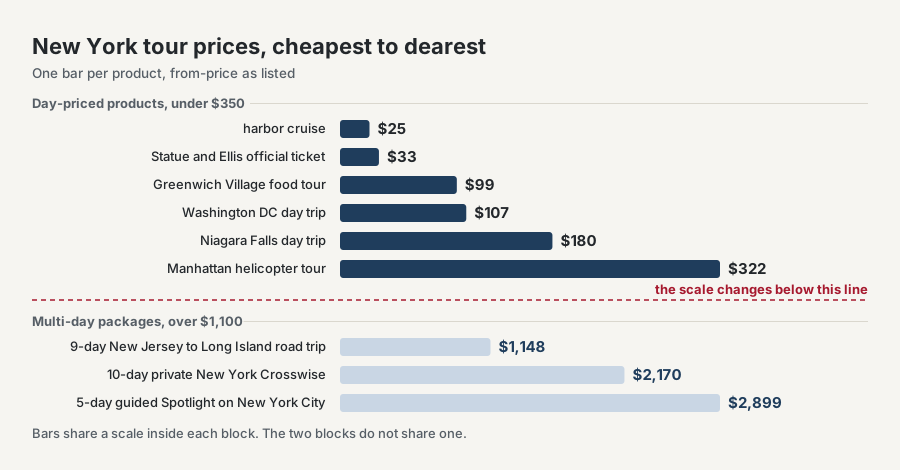
Three days covers Midtown, the harbor and one downtown museum without a sprint. Budget roughly $333 a night for a hotel, $3 per subway ride with a $35 seven-day cap, $39 to $48 for an observation deck and $24 to $36 for the 9/11 Museum. Guided multi-day packages start at $2,899 for five days, while the harbor cruise runs $25 and the official Statue ferry ticket $33.
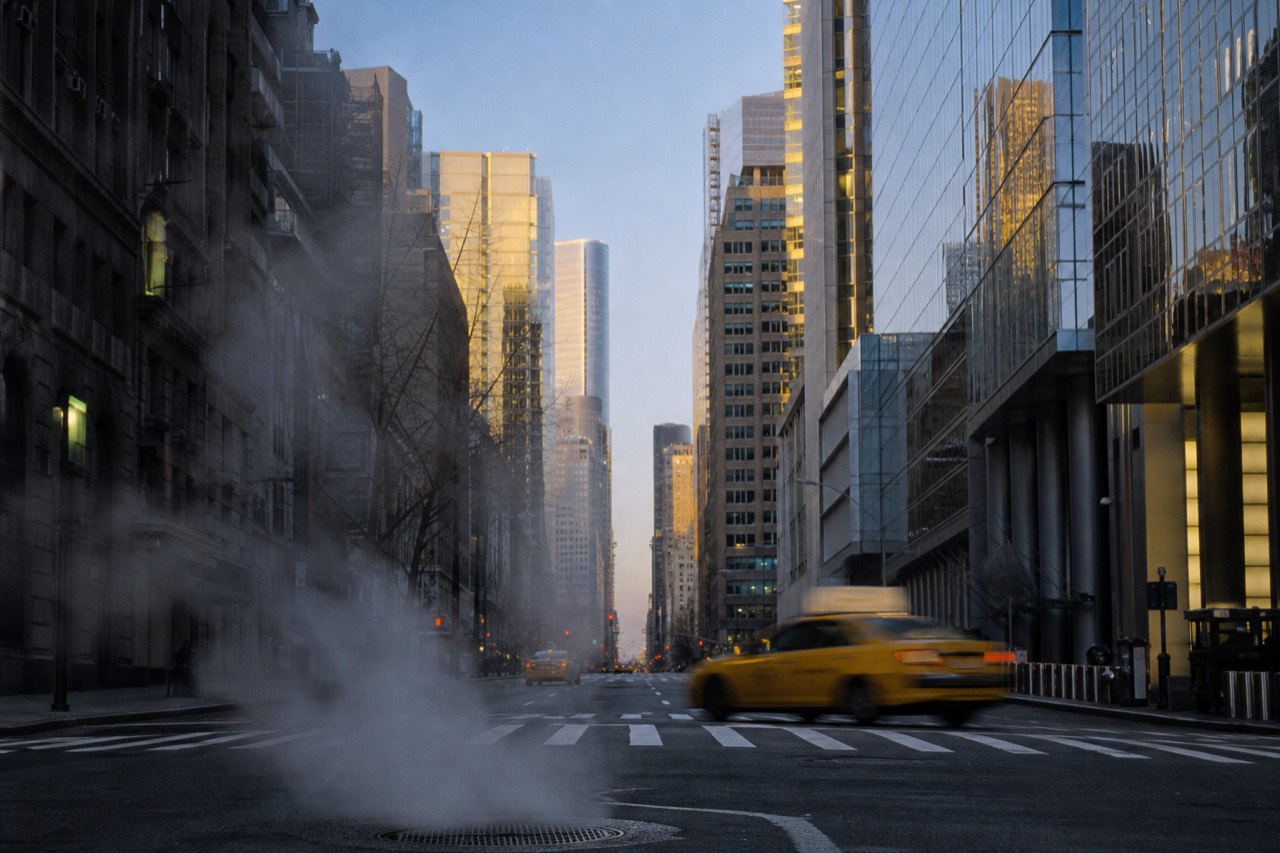
Steam curls out of a vent on Sixth Avenue at seven in the morning and nobody so much as glances at it. That is the first lesson of a short New York trip: the city does not slow down for arrivals, and it will happily eat a full day in transit if you let it. Seventy-two hours is genuinely enough time to stand under the Statue of Liberty, walk a museum that matters, and sit in a Broadway house before the lights drop. What it is not enough time for is a list assembled from other people's highlight reels.
The plan below is built the way locals actually move: in clusters, on foot where walking is faster than waiting, with the two hard-to-book items pinned down first and everything else arranged around them.
What does a three-day New York package actually include?
Most trips sold as three-day New York packages bundle two hotel nights, one guided city tour, and two or three ticketed attractions. Almost none include flights. The multi-day packages on this site run longer: five guided days from $2,899, or ten private self-guided days from $2,170, both with hotel nights attached.
The word "package" does a lot of quiet work in travel listings. At the cheap end it means a hotel room with a bus tour voucher stapled to it. At the guided end it means a tour manager, a fixed group of between 2 and 44 travelers, coach transfers, and admissions bought in bulk months before you arrive. Those two products share a shelf and almost nothing else.
Three-day trips sit in an awkward spot. Operators generally build guided itineraries at five days or longer, because a group needs a full day just to land, clear an airport and find dinner. That is why the shortest fully guided option here is a five-day itinerary rather than a neat 72-hour one. If you have exactly three days and want structure, you are usually assembling it yourself from timed tickets, or taking a private self-guided package and running the first three days of its route.
The honest version of the choice looks like this: a package buys you decisions you no longer have to make, and it buys them at a markup. Doing it yourself buys you flexibility and costs you an evening of research plus the risk of a sold-out ferry. Neither is wrong. Which one wins depends almost entirely on how many people are traveling and how much your evenings are worth to you.
| Option | Length | Guided? | Hotel nights | Headline inclusions | From |
|---|---|---|---|---|---|
| Assemble it yourself | 3 days | No | You book | Nothing bundled | Varies |
| Spotlight on New York City | 5 days | Fully guided, groups of 2 to 44 | 4, Sheraton New York Times Square | Broadway show, harbor ferry, 9/11 Memorial and Museum | $2,899 |
| New York Crosswise | 10 days | Private, self-guided | 10, The Hotel at Fifth Avenue | Neighborhood-by-neighborhood route, Edge, Top of the Rock | $2,170 |
| New Jersey to Long Island road trip | 9 days | Private, self-guided | 8, three named hotels | Princeton, Cape May, Sag Harbor, Montauk | $1,148 |
What does three days in New York cost, item by item?
A mid-range three-day trip for two people lands near $1,900 before flights: roughly $1,000 for two hotel nights at the 2025 average of $333.71, about $70 in transit under the $35 seven-day fare cap, $180 for two observation decks and a museum, $230 for two Broadway seats, and the rest on food.
Hotels are the number that moves everything else. The 2025 citywide average daily rate came in at $333.71, and a separate read across 11.1 million public rate observations put New York at about $336 a night. Those are averages across the whole calendar, which is why they feel wrong when you actually search: January rooms sit somewhere around $196 to $242, while December pushes past $541. Picking your month is worth more than picking your neighborhood.
Transit is the cheapest thing you will touch. The base subway fare went to $3 in January 2026 alongside the full OMNY tap rollout, and the rolling seven-day cap is now permanently $35, meaning rides 13 onward in any seven-day window are free. Two people tapping through a packed three-day trip rarely reach the cap, so budget around $35 each and stop thinking about it. The official MTA fare page is the only place worth checking for changes.
Then come the tickets, which is where three-day trips quietly overspend. Every observation deck in Manhattan now sits in a $39 to $48 band for a standard adult, and they all sell the same view from slightly different angles. Buying two of them is a common and expensive mistake. Buy one, then spend the second slot on water or altitude that a deck cannot give you.
| Line item | Typical 2026 cost | Notes |
|---|---|---|
| Hotel, 2 nights | $392 to $1,082 | 2025 citywide average $333.71 a night; January cheapest, December dearest |
| Subway, per person | $3 a ride, $35 seven-day cap | Free rides after 12 paid taps in a rolling 7 days |
| One observation deck | $39 to $48 | One World from $44, Empire State from $44, Edge from about $39 |
| 9/11 Memorial and Museum | $24 to $36 | Timed entry; guided options $48 to $60 |
| MoMA or the Met | $30 each | Met is pay-what-you-wish for NY, NJ and CT residents only |
| Broadway seat | $113.35 industry average | Season average nearer $131; TKTS same-day 20 to 50 percent off |
| Harbor cruise | $25 | 60 minutes, Circle Line from Pier 83 |
| Statue and Ellis ferry ticket | $33 | Official concessioner, both island museums included |
The Broadway line deserves a second look. The industry average ticket for the week ending 23 August 2026 was $113.35 across 26 shows, and the season average sits nearer $131. Both numbers include premium seats that skew them upward. Same-day TKTS booths discount 20 to 50 percent, and most long-running shows run digital lotteries and rush tickets in the $10 to $60 range. A couple willing to be flexible about which show they see can halve that line.
Day 1, hour by hour: Midtown on foot
Day 1 works best entirely above 34th Street. Land, drop bags, then walk a tight loop: Bryant Park, Grand Central, one observation deck, dinner near the theater district, curtain at 7pm or 8pm. Total ticketed spend for two people is roughly $310 including one deck and two mid-priced Broadway seats.
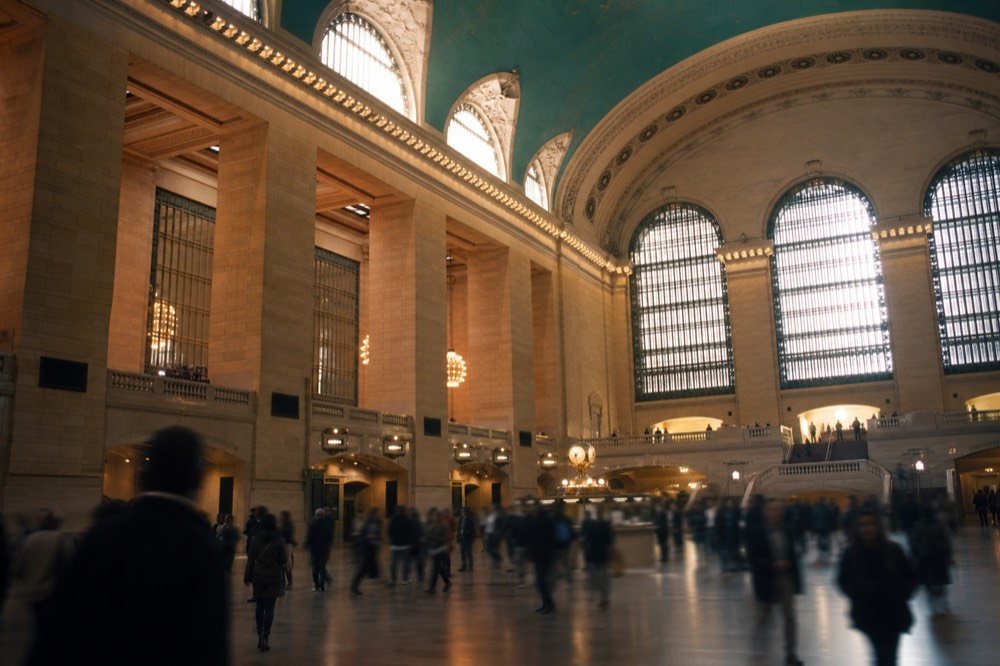
Arrival days lose time to logistics, so the trick is to pick a cluster where nothing is more than fifteen minutes from anything else. Midtown from Fifth Avenue to Eighth is exactly that. Grand Central's main concourse costs nothing, takes twenty minutes and still surprises people who arrived expecting a train station. Bryant Park is four blocks west and functions as the city's outdoor living room, with an ice rink and a market from late October and free rink admission running through 1 March.
The observation deck slot is the one decision worth taking seriously on Day 1. Sunset slots sell out first and cost the most. Late-morning and post-dinner slots are usually available and cheaper, and the post-dinner slot gives you the lit skyline without the queue.
| Time | Stop | Cost per person | Why here |
|---|---|---|---|
| 11:00 | Drop bags, coffee near the hotel | $5 | Most rooms are not ready before 15:00 |
| 12:00 | Grand Central main concourse | Free | Ten minutes' walk from most Midtown hotels |
| 12:45 | Bryant Park and the library steps | Free | Bench lunch, no reservation needed |
| 14:00 | Observation deck, off-peak slot | $39 to $48 | Book the exact time in advance, not on arrival |
| 16:00 | Hotel check-in and a reset hour | Included | The hour that saves the evening |
| 17:30 | Early dinner west of Eighth Avenue | $35 to $60 | Theater-district kitchens turn tables fast |
| 19:00 | Broadway curtain | $113 average, less at TKTS | Doors close on time and stay closed |
Walking distances are short enough in this cluster that the subway is usually the slower option. The table below is the one thing worth memorizing before you land, because it settles the constant question of whether to walk or tap in.
| Route | Distance | On foot | Faster option |
|---|---|---|---|
| Times Square to Bryant Park | 0.3 mi | 7 min | Walk |
| Bryant Park to Grand Central | 0.4 mi | 8 min | Walk |
| Grand Central to Top of the Rock | 0.7 mi | 14 min | Walk |
| Times Square to Pier 83 | 0.9 mi | 18 min | Walk, or crosstown bus |
| Midtown to Battery Park | 5.5 mi | Too far | Subway, about 30 min, $3 |
| Battery Park to the Brooklyn Bridge walkway | 1.1 mi | 22 min | Walk |
| Union Square to Greenwich Village | 0.8 mi | 16 min | Walk |
Day 2: the harbor, Ellis Island and downtown
Give the harbor a full morning. The official Statue of Liberty and Ellis Island ticket costs $33 and includes both island museums, and it is the only ferry with landing rights. A 60-minute skyline cruise from Pier 83 costs $25 and never lands, which suits travelers who want the view and their afternoon back.
The harbor is where short trips get robbed of time. Security screening, ferry queues and two island stops mean a proper Liberty and Ellis morning runs three to four hours door to door, sometimes more in July and August. That is fine if you plan for it and a disaster if you assumed an hour. The official ticket is sold by Statue City Cruises, the concessioner with the ferry contract, and it covers the pedestal grounds plus the museums on both islands. Crown access is a separate, scarcer thing: tickets release on the first of each month for six months ahead, sell out three to six months in advance during peak season, and involve 215 steps to the pedestal plus another 162 narrow steps to the crown, with a ten-minute limit at the top and a 42-inch minimum height. The National Park Service page for the monument carries the current access rules.
Ellis Island is quietly the better museum of the two, and it is currently open through a $117 million renovation with completion expected in 2026. Travelers with family records to look up should build in an extra forty minutes there.
If three to four hours is more than a 72-hour trip can spare, the sixty-minute Circle Line cruise out of Pier 83 is the honest substitute. It has run since 1945, it passes the statue close enough for the photograph everyone wants, and at $25 with a 4.5 rating across 3,478 reviews it is the cheapest genuinely good thing on the water. Travelers who take it almost never regret the trade; travelers who skipped Ellis Island to do both usually do.
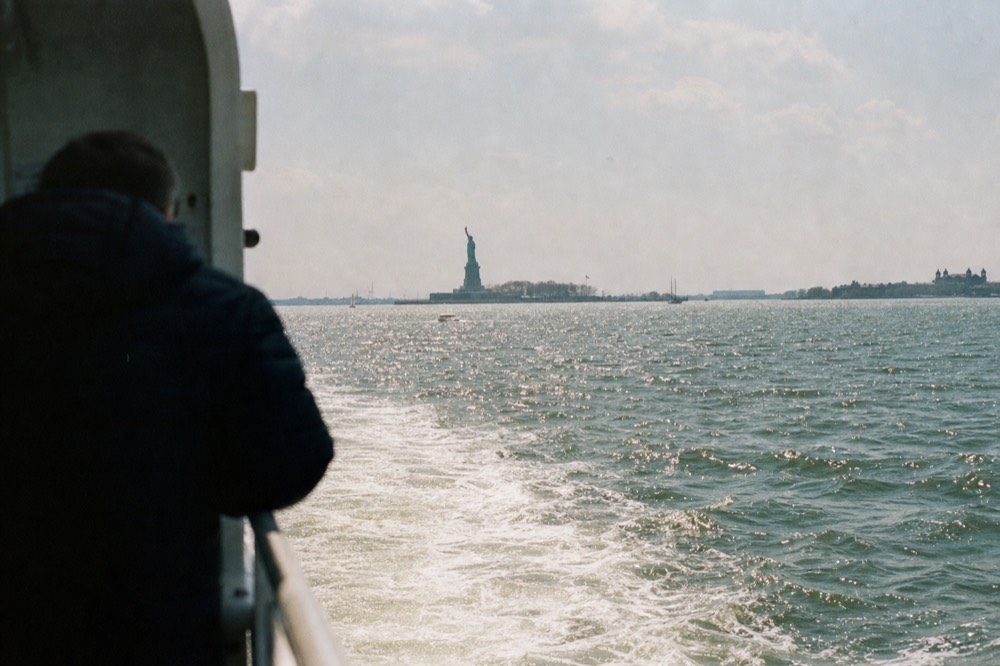
If you want the water without losing the afternoon, it is worth a look at the sailing times and the live price before you commit the morning to the islands.
Afternoon belongs downtown. The 9/11 Memorial pools are free and open air; the museum below costs $24 to $36 with timed entry and guided options at $48 to $60. Ninety minutes is the minimum that does it justice, and the memorial's own visiting page lists the current timed-entry windows. From there the Brooklyn Bridge walkway starts about twenty minutes' walk away and delivers the best free hour in the city, especially in the last light.
| Harbor option | Time needed | From | Rating and sample | Best for |
|---|---|---|---|---|
| Statue of Liberty and Ellis Island official ticket | 3 to 4 hours | $33 | 4.6 across 20,597 reviews | Travelers who want to land and see both museums |
| 60-minute skyline and Lady Liberty cruise | 60 minutes | $25 | 4.5 across 3,478 reviews | Short trips that still want the harbor |
| Manhattan sightseeing helicopter tour | 12 to 18 minutes flying | $322 | 4.8 across 7,445 reviews | One splurge, best weather day |
Day 3: uptown, the park and something you eat
Day 3 should be slower on purpose. Central Park costs nothing and absorbs two hours; one museum at about $30 fills the middle; a three-hour walking food tour at $99 with six tastings replaces both lunch and the afternoon. The Greenwich Village tour rates 5.0 across 1,652 reviews.
By the third morning most visitors are tired in a way that makes another ticketed queue actively unpleasant. The fix is to swap density for distance. Central Park is 843 acres of it, and the loop from the southeast corner up past the Mall and the Bethesda Terrace to the Lake is roughly an hour at a wandering pace. The Met sits on the park's eastern edge at about $30 for non-residents, with pay-what-you-wish pricing reserved for New York, New Jersey and Connecticut residents. MoMA is $30 flat and needs less time.
The alternative to a third museum is eating your way through a neighborhood. A three-hour Greenwich Village food tour with six tastings runs $99 through Nice Guy Tours, holds a 5.0 rating across 1,652 reviews and carries a platform experience award. It solves lunch, it solves the afternoon, and it puts you in the part of the city that most first-time itineraries skip because it has no single landmark to photograph. Travelers who take it consistently describe the guide's neighborhood history as the part they remember, not the food. The best food tour question, answered properly weighs it against the city's other tastings.
Groups that want a guided version of this day without a full package usually book a single walking tour and leave the rest open. If that is the shape of your trip, check which afternoons still have space, because three-hour small-group walks fill earlier than ticketed attractions do.
For a longer version of this same day, with the fourth-day options laid out, the four-day New York plan covers what changes when you add 24 hours, and the short answer to what to do with exactly three days strips the plan back to its bones.
Is the skyline better from a deck, a boat or a helicopter?
Pick one, not three. A deck costs $39 to $48 and gives you an hour on your own schedule. The $25 cruise gives you the statue and the downtown wall from water level. A helicopter runs from $322 for 12 to 18 minutes of flying and rates 4.8 across 7,445 reviews, the highest-rated view in the city.
Observation decks have converged. One World Observatory starts at $44, the Empire State Building's 86th-floor deck starts at $44, Top of the Rock lands around $42 to $45, the Edge sits between $39 and $46, and Summit One Vanderbilt runs $45 to $48. All are dynamically priced, all sell timed slots, and the real difference between them is which building you would rather have in the photograph. Top of the Rock is the only one where the Empire State Building is the view rather than the vantage point.
Water and air are the two genuinely different products. The helicopter tours fly from the Downtown Manhattan Heliport with the doors on, Monday to Saturday between 10am and 5pm, on over-water routes only, and a 2025 city law is phasing in noise standards that have already narrowed what operators can fly. Twelve to eighteen minutes sounds short until you are in it. The 4.8 rating across 7,445 reviews and the platform's top-rated badge suggest very few people find it disappointing, which is unusual for a product at this price.
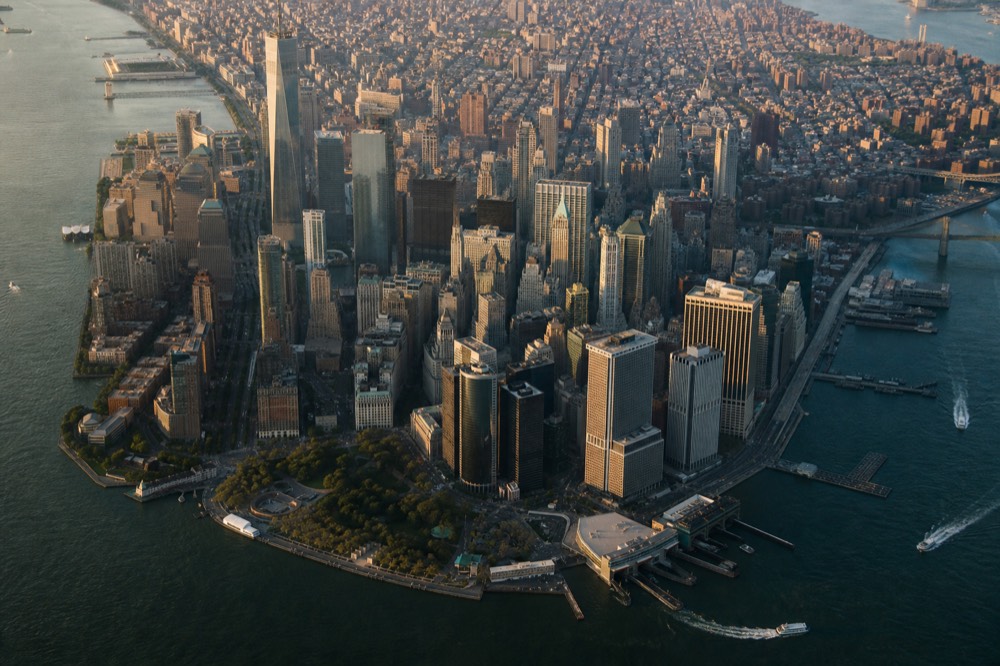
The case against it is simply the arithmetic. At $322 a head, a couple is spending more on eighteen minutes than on two hotel nights in January. If the trip has one splurge in it and the forecast is clear, see the available flight windows and put it on the best weather day rather than the most convenient one.
Does a package beat booking the same three days yourself?
For two travelers, three self-booked days in a mid-priced season come to roughly $1,900 all in. A five-day guided package at $2,899 per person buys four hotel nights, a Broadway seat, the harbor ferry and the 9/11 Museum, plus a tour manager. Per day, the package costs more; per decision, it costs far less.
Run the numbers honestly and the package rarely wins on price alone. What it wins on is variance. Self-booked trips go wrong in specific, predictable ways: the ferry sells out, the deck slot you wanted is gone, the show you picked is dark on Mondays, and you spend the second afternoon on your phone rather than in the city. A guided itinerary has already absorbed those problems, and departures listed as guaranteed will run regardless of how many people book.
| Cost, two travelers | Self-booked 3 days | Guided 5-day package |
|---|---|---|
| Hotel | $667 to $2,164 for 3 nights | 4 nights included |
| City guiding | $0 | Tour manager throughout |
| Broadway | $227 at industry average | 1 show of your choice included |
| Harbor and islands | $66 | Ferry to Liberty and Ellis included |
| 9/11 Museum | $48 to $72 | Included |
| Observation deck | $78 to $96 | Not the itinerary's focus |
| Headline price | Varies by month | $2,899 per person |
That last row is where the comparison stops being neat. The self-booked column swings by more than a thousand dollars depending on whether you go in January or December, while the package price does not move with the hotel market. Travelers who care about a predictable number, and travelers who do not want to research anything, tend to be the ones who come out ahead. The full inclusion breakdown is in the guide to what an all-in New York package really covers, and the arithmetic behind each price point sits in the cost breakdown for a package.
If you would rather see the whole shelf before deciding, the New York tour packages collected here are listed with their real prices, durations and review counts, from the three multi-day options down to every verified day tour under $350.
What actually ruins a three-day plan?
Four things: double-booking observation decks, assuming the Statue ferry takes an hour, buying tickets from anyone on the street, and stacking two boroughs into one afternoon. The city's own consumer guidance names costumed characters demanding $20 to $40 after a photo and unlicensed sellers near Battery Park as the most common tourist complaints.
New York in 2026 is not the city of its reputation. Index crime is down about 6 percent year to date at the midpoint of 2026, with record-low murders and shootings in the first half of the year. The risks a three-day visitor actually faces are financial and small, and a 2026 City Council report plus the city's own guidance describe them plainly: costumed characters in Times Square who demand $20 to $40 once the photo is taken, people dressed as monks who press a bracelet into your hand and then ask for a donation, unlicensed ticket sellers near Battery Park quoting incomplete Statue ferry prices, and pedicabs that hide the per-minute rate they are legally required to display.
None of these need a defensive posture. They need one habit: buy nothing on a sidewalk, and check a rate before you sit in anything with wheels. The city's consumer guide for tourists spells out the rules that street vendors are supposed to follow.
| Time sink | What it costs | The fix |
|---|---|---|
| Two observation decks | $78 to $96 per person | Buy one deck, spend the rest on water or air |
| Underestimating the ferry | Half a day | Block 3 to 4 hours or take the 60-minute cruise |
| Street ticket sellers near Battery Park | Inflated, incomplete prices | Buy the $33 official ticket in advance |
| Costumed character photos | $20 to $40 on demand | Agree a price first or walk past |
| Pedicab without a quoted rate | Open-ended | The per-minute rate must be displayed by law |
| Two boroughs in one afternoon | The afternoon | Cluster by neighborhood, not by landmark |
More of these, including the ones that only bite in high season, are collected in the guide to what to sidestep as a visitor. And if the plan grows a fourth day, the options that fit inside a single day out of the city are ranked in the day tours from New York guide, from the $107 Washington DC run to the 22-hour Niagara Falls trip.
Questions travelers ask before booking three days
Is 3 days enough time in New York City?
Three days covers Midtown, the harbor and one major museum comfortably, plus a Broadway show. It is not enough for two boroughs, three observation decks and a day trip. Visitors who accept one neighborhood cluster per day almost always report a better trip than those who try to cross the city twice daily.
How much does a 3 day New York tour package cost?
Self-booking three days for two people typically lands near $1,900 before flights, driven mainly by hotel rates that averaged $333.71 a night in 2025. Guided multi-day packages start higher and run longer: five guided days from $2,899 per person, or ten private self-guided days from $2,170, both including hotel nights.
What are the best tour packages for New York City on a short trip?
For three days, a single guided walking tour plus timed tickets usually beats a full package, since guided itineraries are built at five days or longer. If you want structure across a longer stay, the five-day guided option includes a Broadway show, the harbor ferry and the 9/11 Museum for $2,899.
Should I buy a Statue of Liberty ticket in advance?
Yes. The official ticket is $33 and includes both island museums, and it is the only ferry permitted to land. Crown tickets are released on the first of each month for six months ahead and sell out three to six months in advance in peak season. Street sellers near Battery Park quote incomplete prices.
Is the subway worth using for a three-day trip?
Yes, though less than visitors expect. Midtown clusters are faster on foot. The base fare is $3 with a rolling seven-day cap of $35, so heavy use is capped. Budget around $35 per person for three days and walk anything under about eight blocks.
What is the cheapest month to visit New York?
January, by a wide margin. Hotel rates fall to roughly $196 to $242 a night against a December peak above $541, and January averages 39.5°F by day and 27.9°F at night. Broadway lotteries and TKTS discounts of 20 to 50 percent are also easiest to land in the post-holiday weeks.